
In this edition of This Week In Data, we discuss:
Housing loan softness extends to NBFCs
NBFCs seeing strong growth in non-housing retail loans
Housing loan slowdown despite sharper fall in interest rates
Household debt continues to increase
FX Reserves continue to rise
We had discussed the uptick in credit growth a couple of weeks back. One of the points made there was that while overall credit growth had accelerated sharply over the past year, personal or retail loans had not seen much of an uptick, and that was mostly due to housing loans, where growth had remained largely unchanged. Specifically, we noted that (data as of June):
“Mortgages or home loans, the biggest chunk of personal loans, have seen growth remain largely stable at 11% YoY as against 10% YoY a year back.”
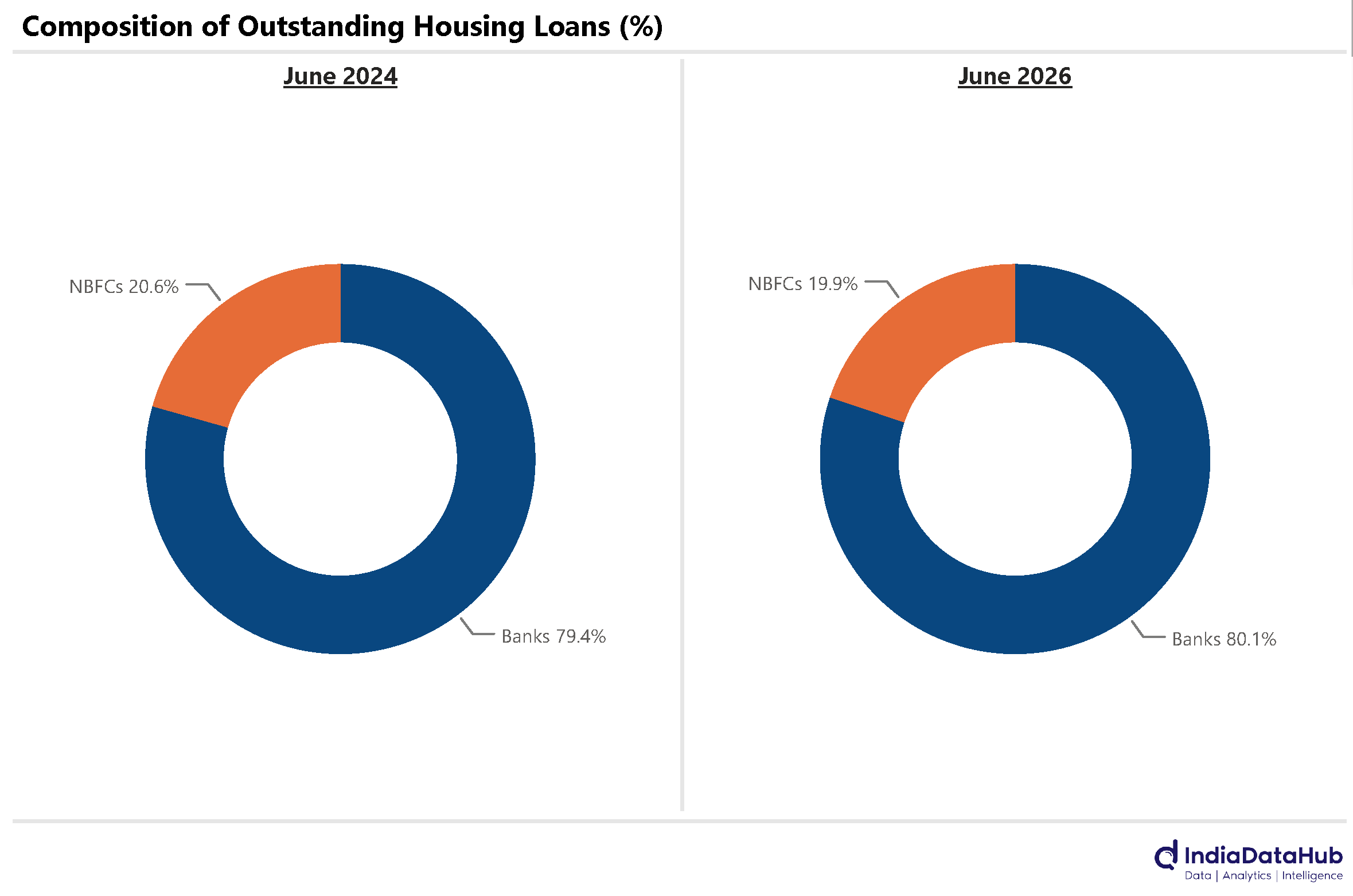
But as we know, NBFCs are a large player in the home loan market. Even after the merger of HDFC with HDFC Bank, NBFCs account for ~20% of total home loans. But unfortunately, over the past two years, NBFCs have not seen strong growth in home loans. Over the past two years, while outstanding home loans from Banks have grown by ~22%, those by NBFCs have grown by 16% in absolute terms. Thus, NBFCs have lost market share in the home loan market (ever so slightly). Collectively, their share has fallen from 20.6% two years ago to 19.9% as of June this year. A small but downward change.
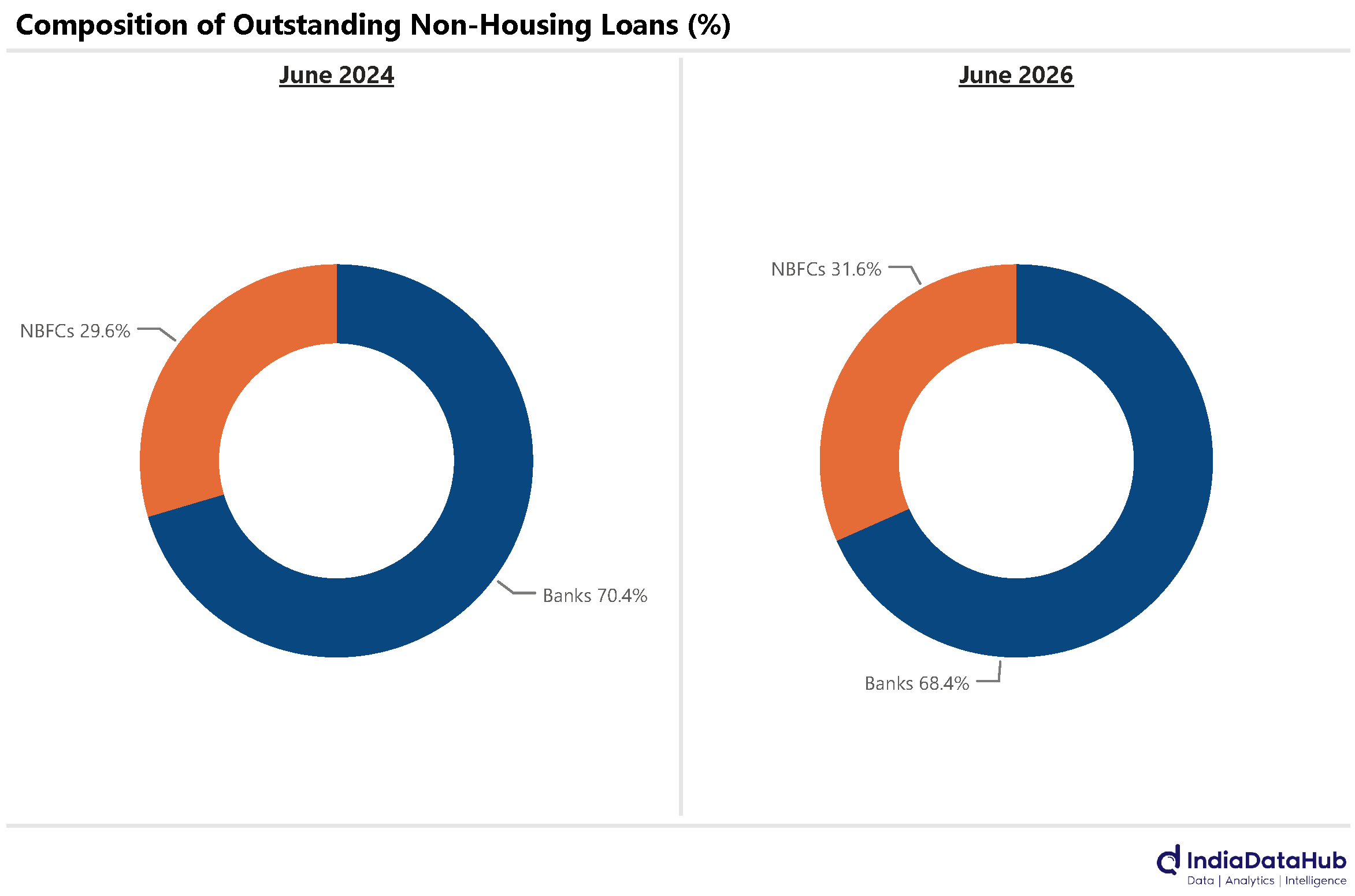
But what is true of mortgages is not true of retail/personal loans in general. Overall retail/personal loans of NBFCs have grown by almost 38% over the past 2 years, as against just 29% growth for the banking sector. Essentially, non-housing loans have seen much stronger growth for both banks and NBFCs, but NBFCs have seen much stronger growth than banks.
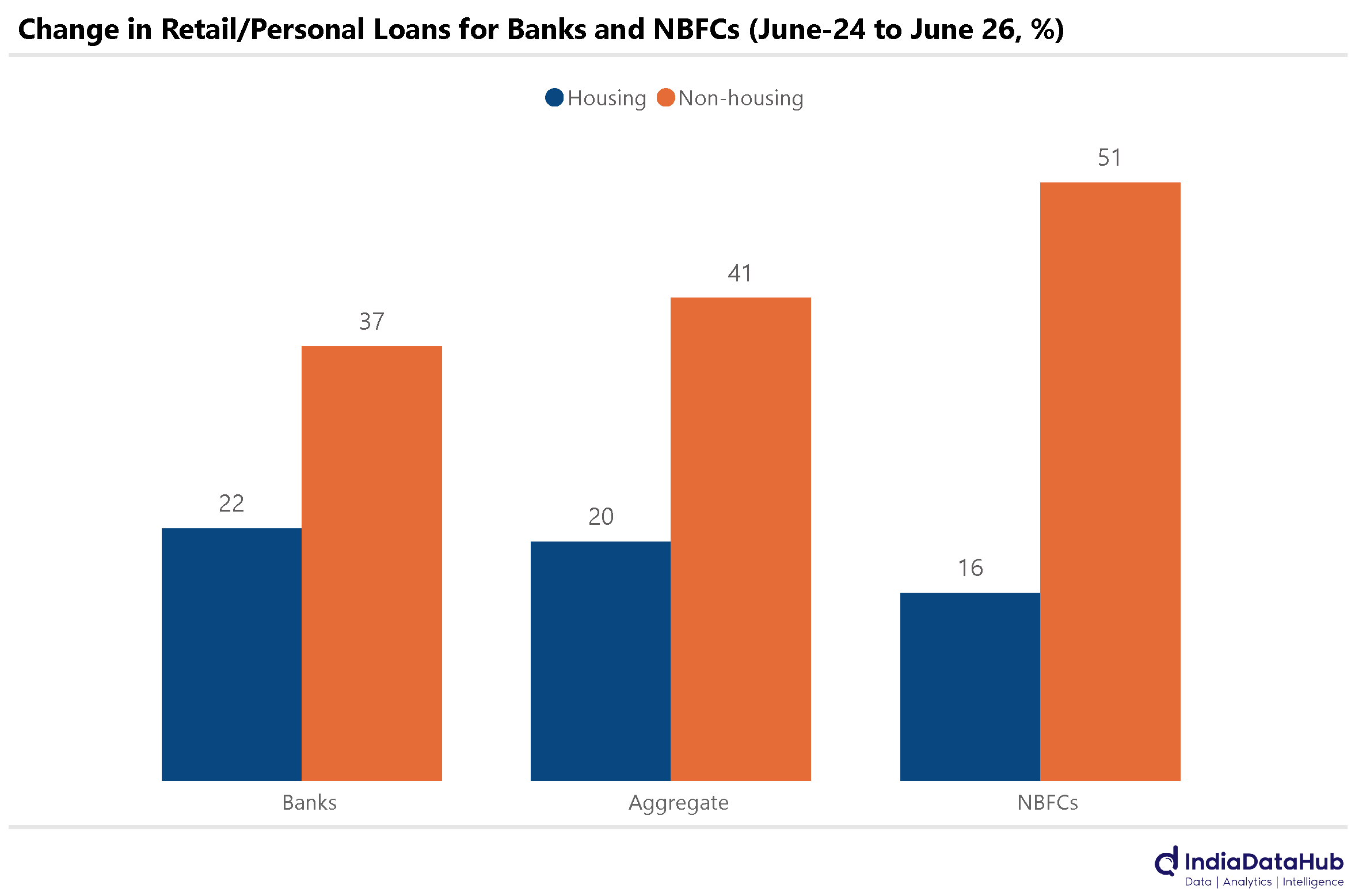
And non-housing retail loans for NBFCs have grown by 50% over the past 2 years as against 37% for Banks. And NBFCs have a higher share in non-housing personal loans than in housing loans, so the higher growth has meant higher overall loan growth for the category.
What is also noteworthy about the generally sluggish growth in housing loans is that they do not seem to have exhibited much price sensitivity. Over the past two years, the average interest rate on fresh housing loans has seen a decline of 125bps. This is against an 80bps decline in the average interest rate on all fresh loans. Contrast this with large industries, where the average interest rate on fresh loans has seen a decline of just 70bps.
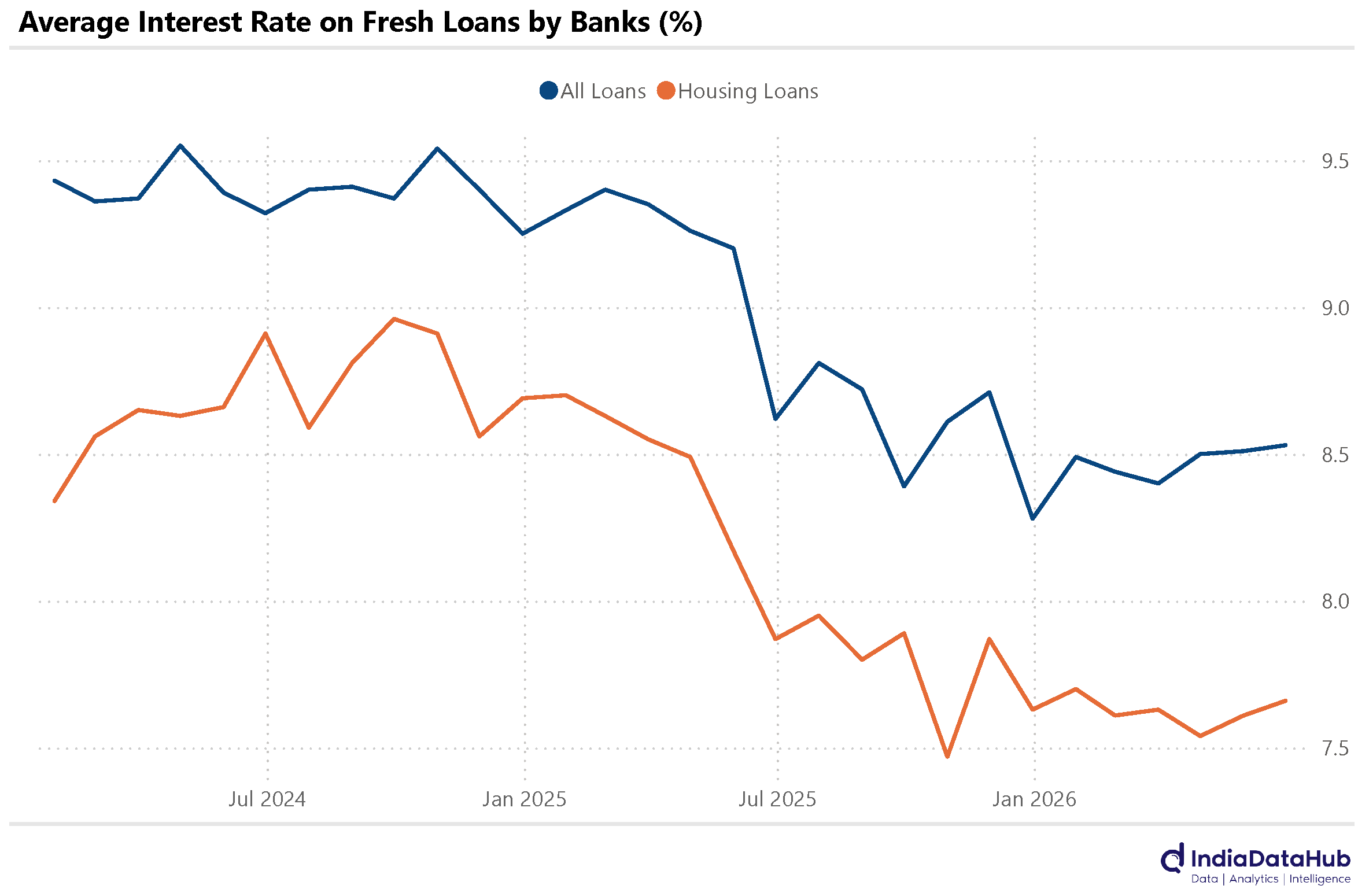
So, housing loans have seen a far bigger decline in interest rates than most other loan segments. However, despite this, loan growth has not seen a material uptick. Is this telling us something about the state of the housing market in the country in general?
Notwithstanding the sluggish growth in housing loans, overall personal/retail loans have seen very strong growth in recent quarters (albeit lower than other segments of the economy such as Industry or Services). And this is reflected in lower household savings. As per provisional data from the RBI, household financial savings declined 4% YoY in FY26, after having risen 32% YoY in FY25. The decline in FY26 is almost entirely due to higher debt. Household debt increased by Rs21tn in FY26 as per the provisional data. In FY25, household debt had increased by Rs16tn. This increase more than offset the increase in gross savings.
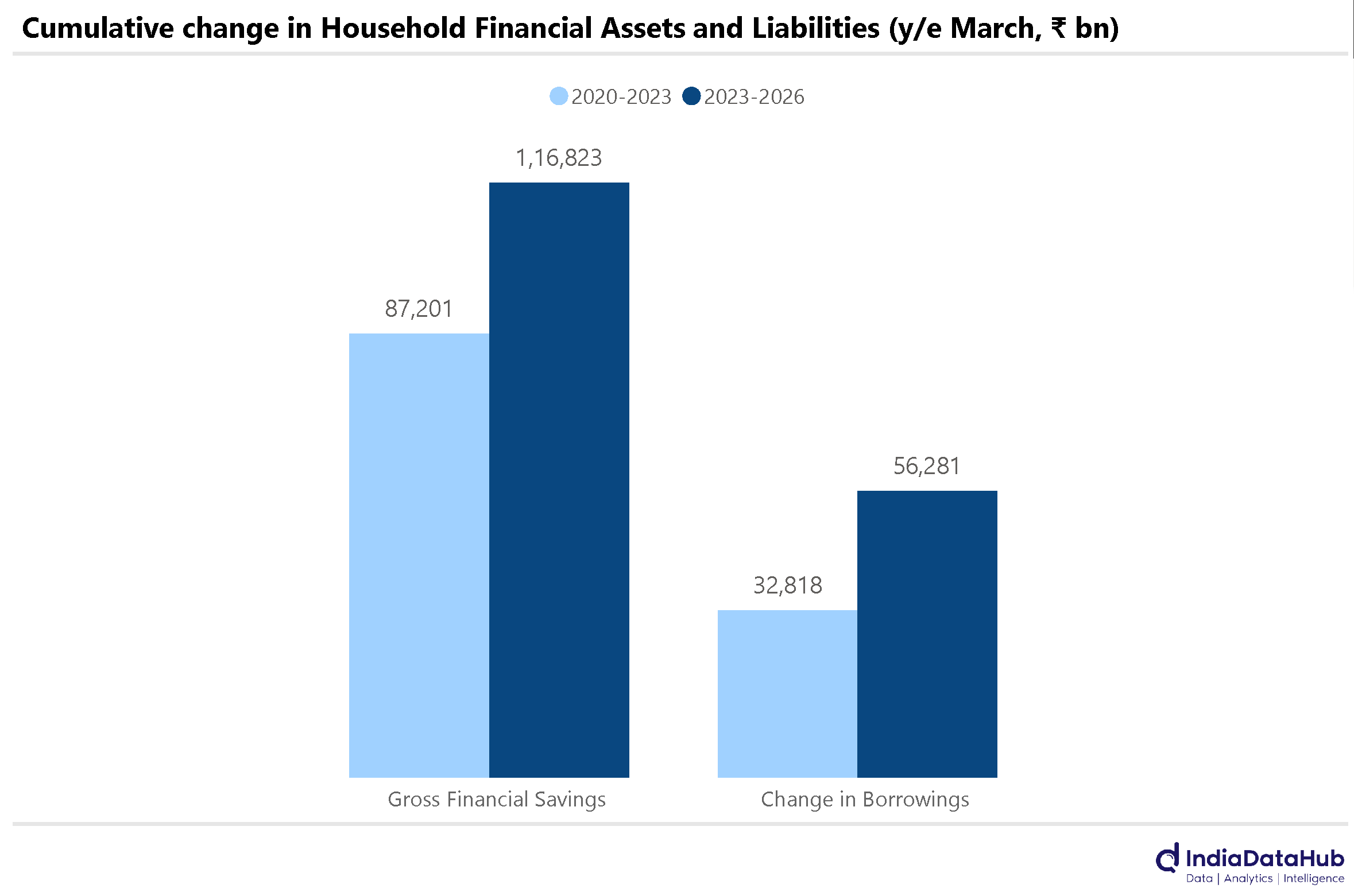
And while there will be year-to-year volatility in flow data, the medium-term picture is also not materially different. In the last 3 years, household savings averaged Rs39tn per year, 34% higher than the preceding 3-year period. However, household debt increased by an average of Rs19tn per year, an increase of 70% over the preceding 3-year period. Consequently, annual household savings increased by a modest 10% during this period. Households are saving more every year, but they are, in aggregate, taking on a lot more debt. If this higher debt is simply a shift in borrowing source from informal to formal sources, then in aggregate household balance sheets are not worse off. But if not, households are leveraging up.
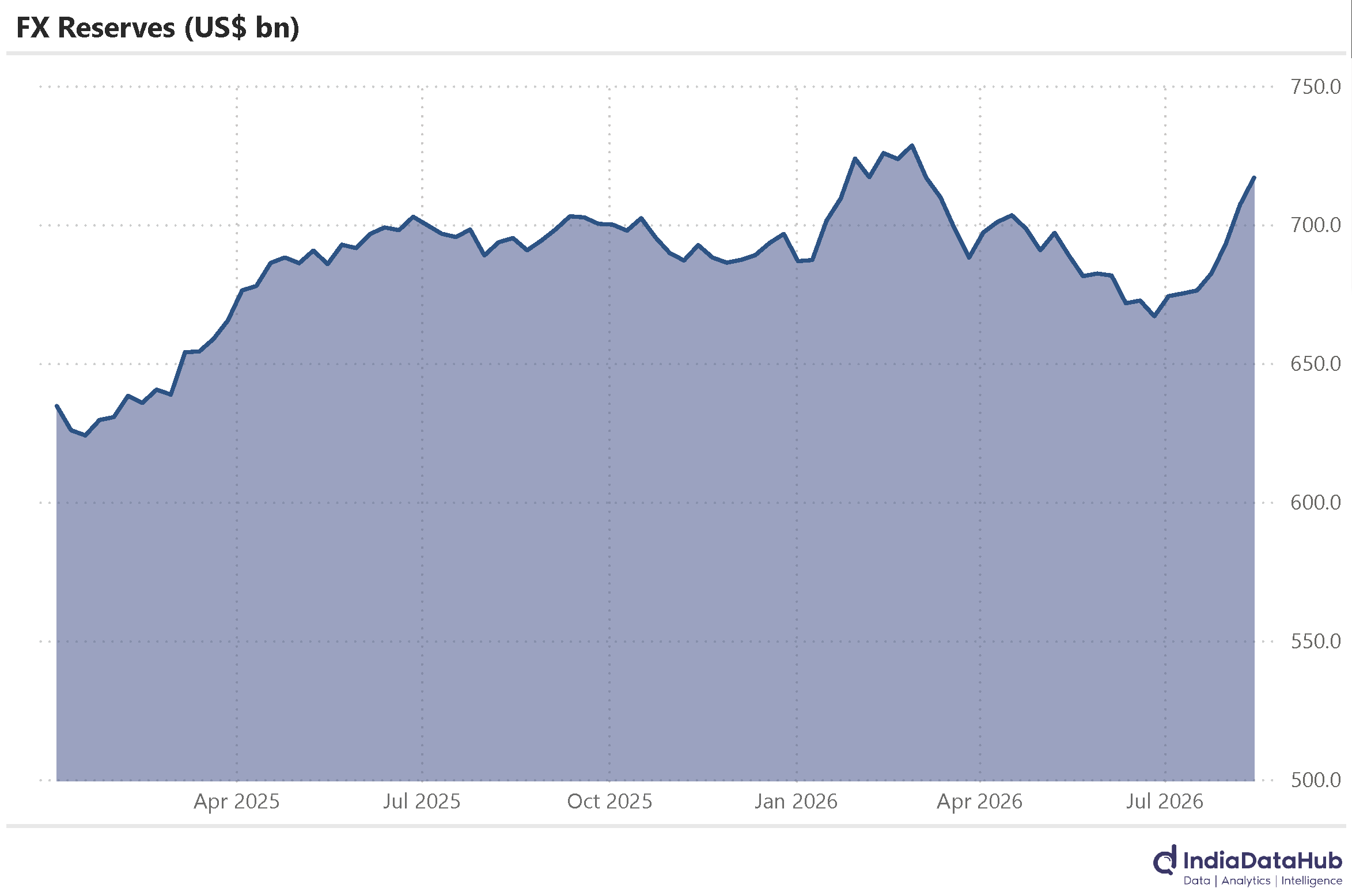
Lastly, FX reserves continue to increase. During the week ending August 14th, they increased by almost US$10bn, reaching U$717bn. Most of the increase was due to higher foreign currency assets, suggesting that the inflows under the NRI deposit schemes are possibly still being repatriated back to India and that the RBI is actively intervening in the market to shore up reserves, but for which the rupee could have possibly modestly appreciated.
That’s it for this week. See you next week…
Leverage accumulating at all wrong places for households
The housing-credit data is the part I’d keep coming back to. India’s credit story isn’t just about whether borrowing is rising, but where that leverage is accumulating and what households are borrowing against. That distinction matters a lot more than the headline growth number.