
In this edition of This Week In Data, we discuss:
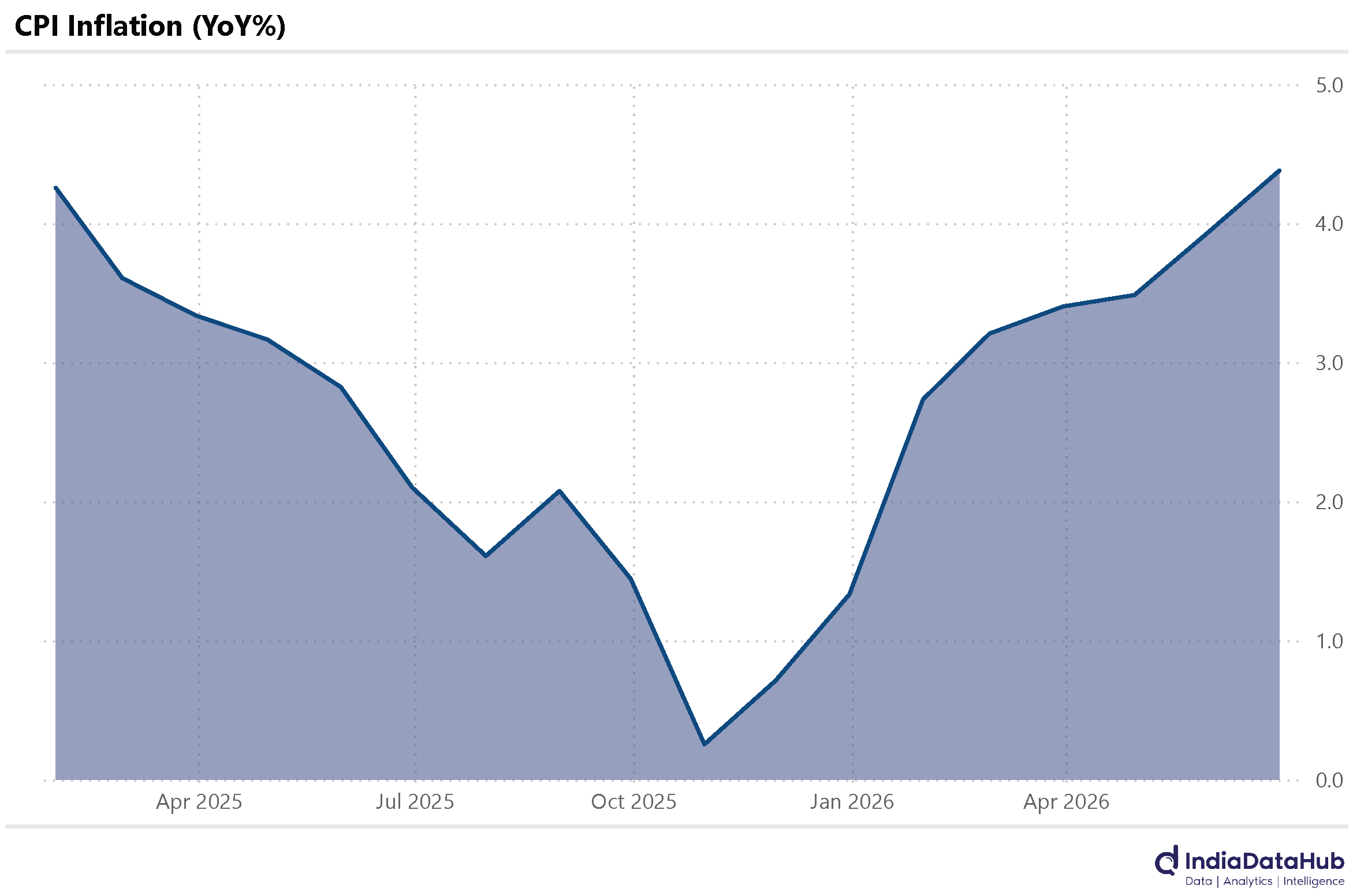
CPI Inflation rises above 4%
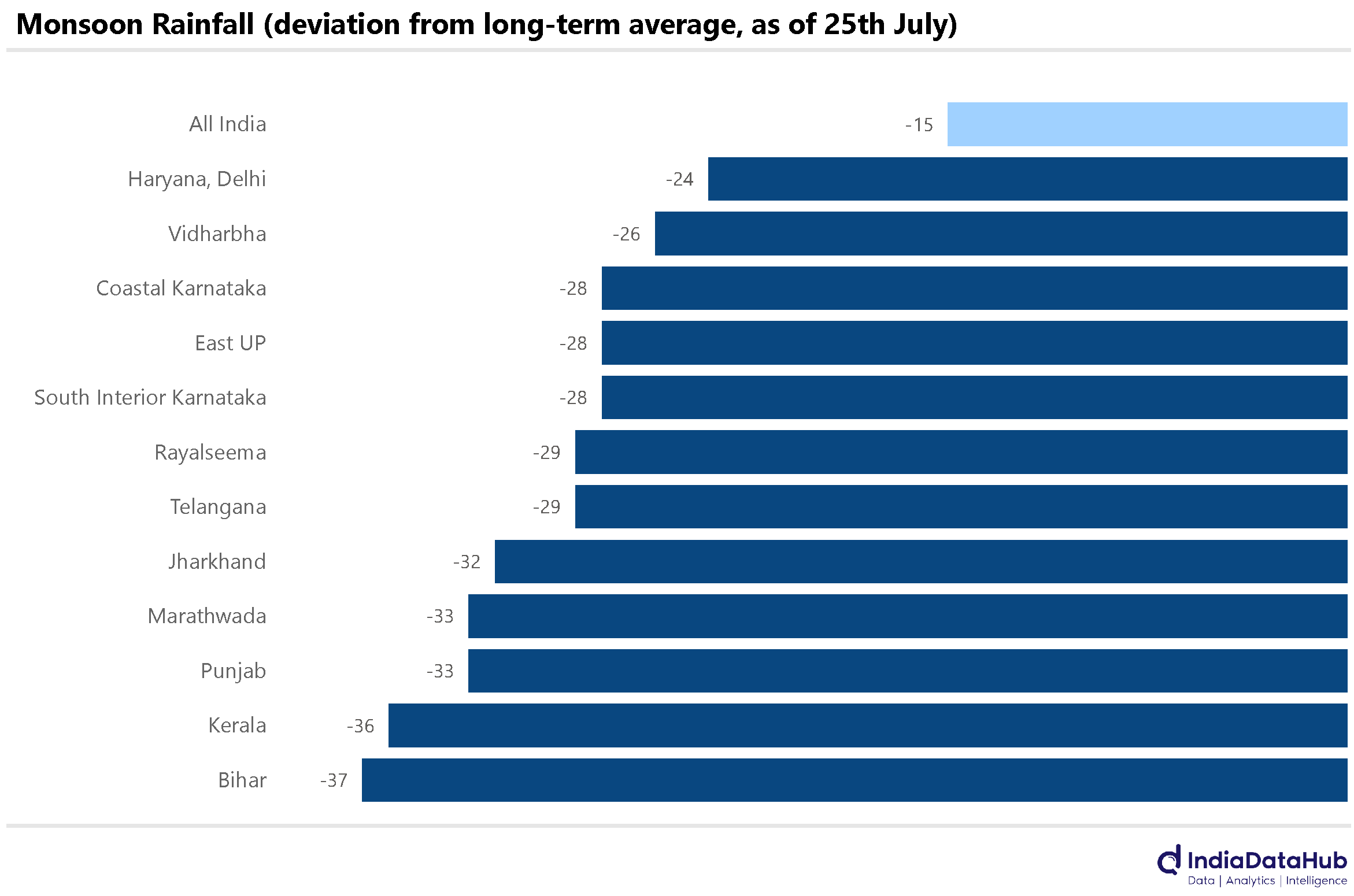
Monsoon rains remain well below long-term average with significant spatial divergence
Oil prices are back above US$100
Exports continue to see strong growth, but Imports are growing even faster
FDI turned negative in May as inflows decelerated
Credit growth continues to remain healthy
Headline CPI Inflation rose above 4% YoY in June for the first time since January last year. It printed at 4.4% YoY, the highest since December 2024. Food inflation rose above 5% and remains the key driver of headline inflation. However, non-food inflation also rose 40bps to 3.9% YoY, but it remains below 4%. While overall inflation continues to remain comfortable, the near-term risks have once again risen.
Monsoon rains remain well below the long-term average with almost half the season behind us. As of yesterday, the cumulative monsoon rainfall was 15% below normal, with 17 of the 36 meteorological regions seeing a 20% or more deficit in rains. East Uttar Pradesh and Bihar, two of the most monsoon-dependent regions for Agriculture, have seen over a 30% deficit in rains till now. Large parts of Andhra Pradesh and Telangana, as well as large parts of Maharashtra, have seen over a 25% deficit in rainfall.
Oil prices are back in focus with the resumption of hostilities in the Middle East. The price of the Indian basket of crude oil has risen back above US$100/bbl, although it remains below the peak in the previous quarter. And the rupee has slipped below 96 against the USD. All in all, the RBI will remain in watchful mode. Rate cuts are definitely off the table now. While rate hikes do not appear to be imminent, that is the most likely direction for interest rates, if and when the status quo changes.
Exports rose 16% YoY in June and have averaged mid-teens growth over the past 3 months. This is being driven by a 35% growth in Petroleum exports (a reflection of higher prices), 18% growth in Engineering goods and 22% growth in Electronics exports. Pharma and Gems and Jewellery are seeing relatively weak growth (single digits).
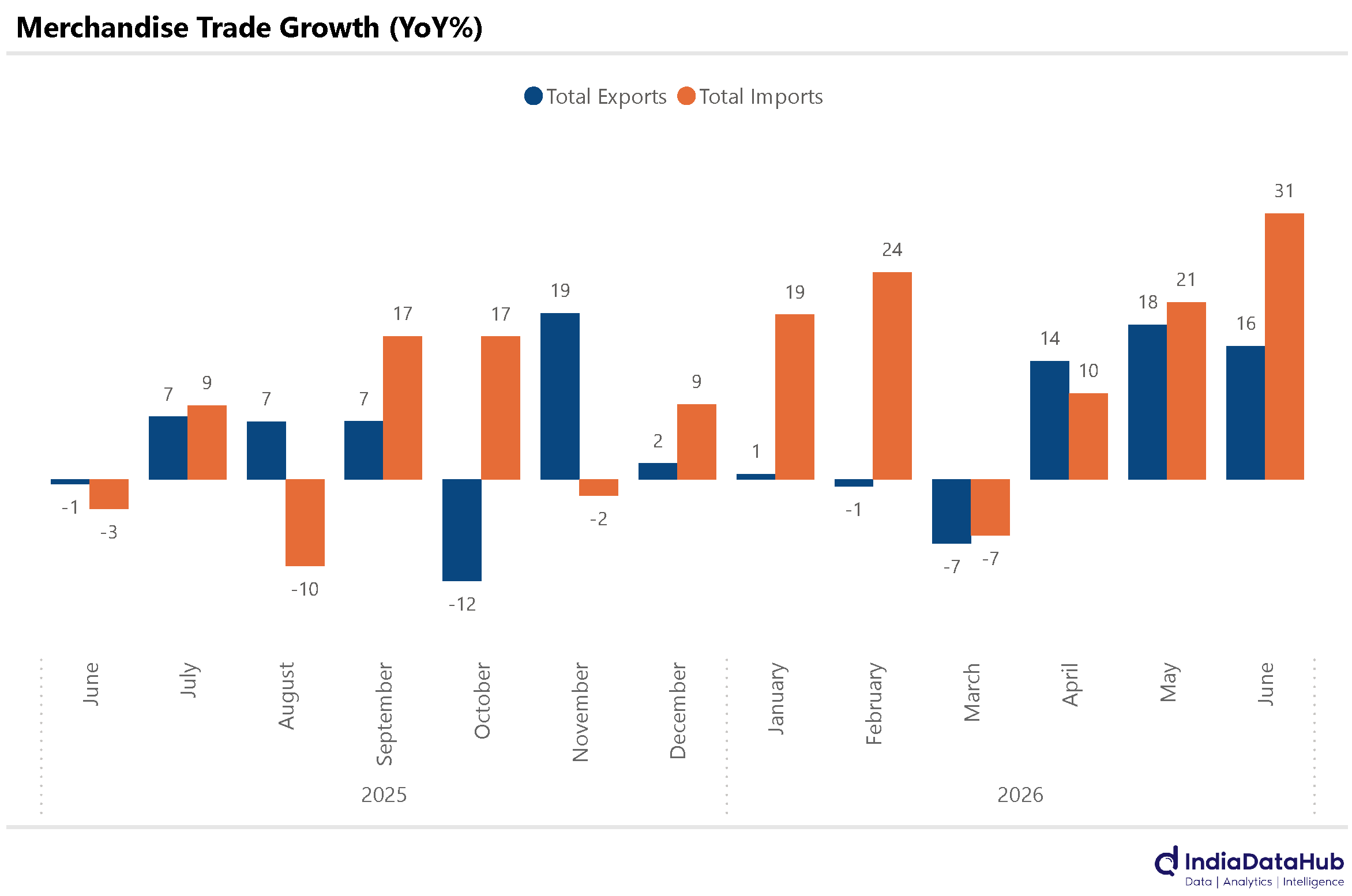
Imports, on the other hand, saw over 30% YoY growth in June, the highest in over a year. This was driven by a 40% growth in Oil imports. Note that we had flagged that oil imports had not seen growth commensurate with the increase in prices. Part of this was just lower volume growth, which is now being corrected. However, Fertiliser imports tripled in June, and Electronic imports also rose by almost 60% YoY, and Machinery imports have seen 30% YoY growth. So the growth in imports was broad-based. But what is likely is that this also suggests deferred imports now catching up.
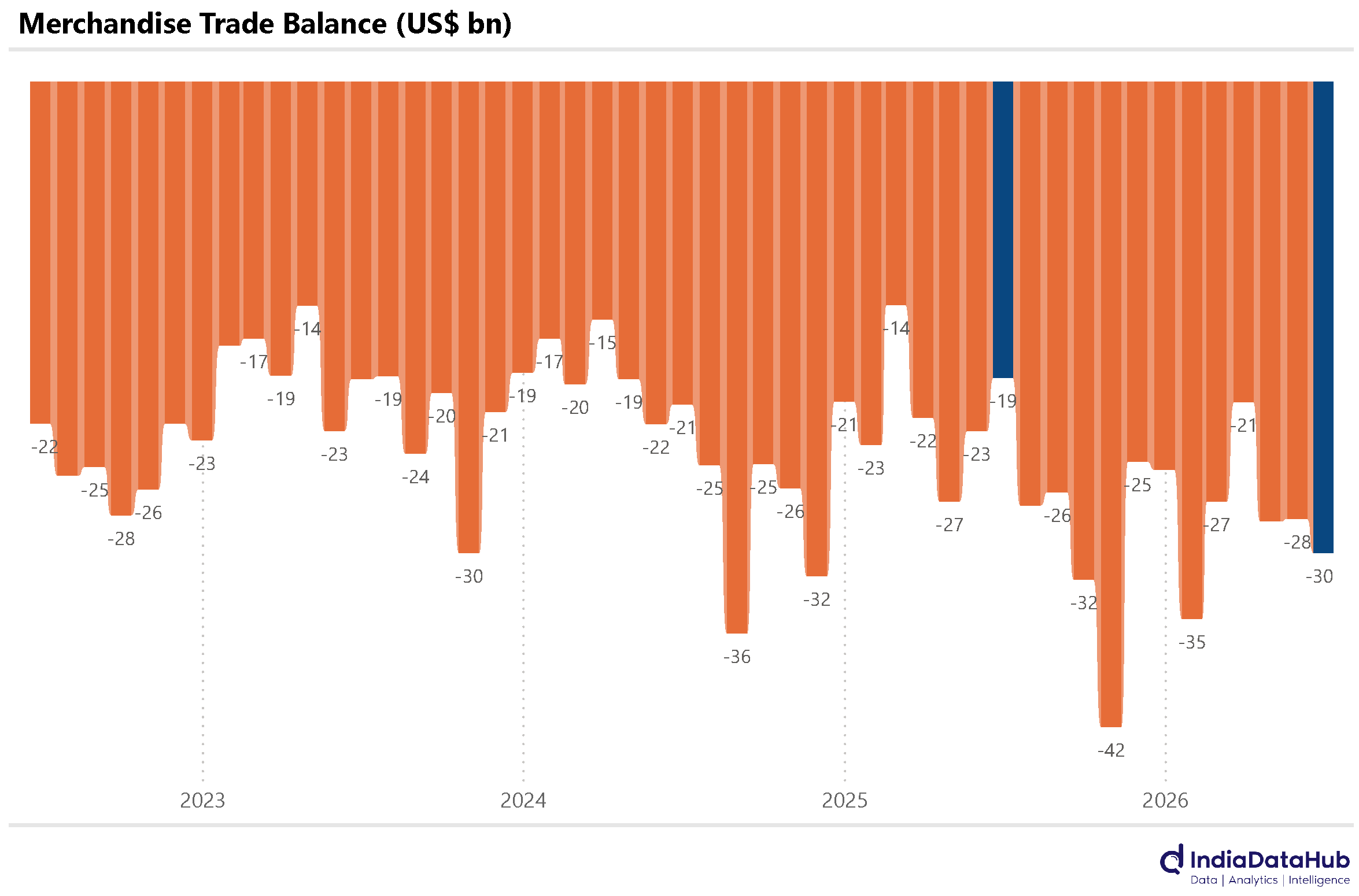
The net result though was a sharp widening of the trade deficit – from US$19bn in June last year to US$30bn this year. The first quarter of this year (June quarter) has seen the trade deficit widen to US$87bn from US$59bn in the same period last year.
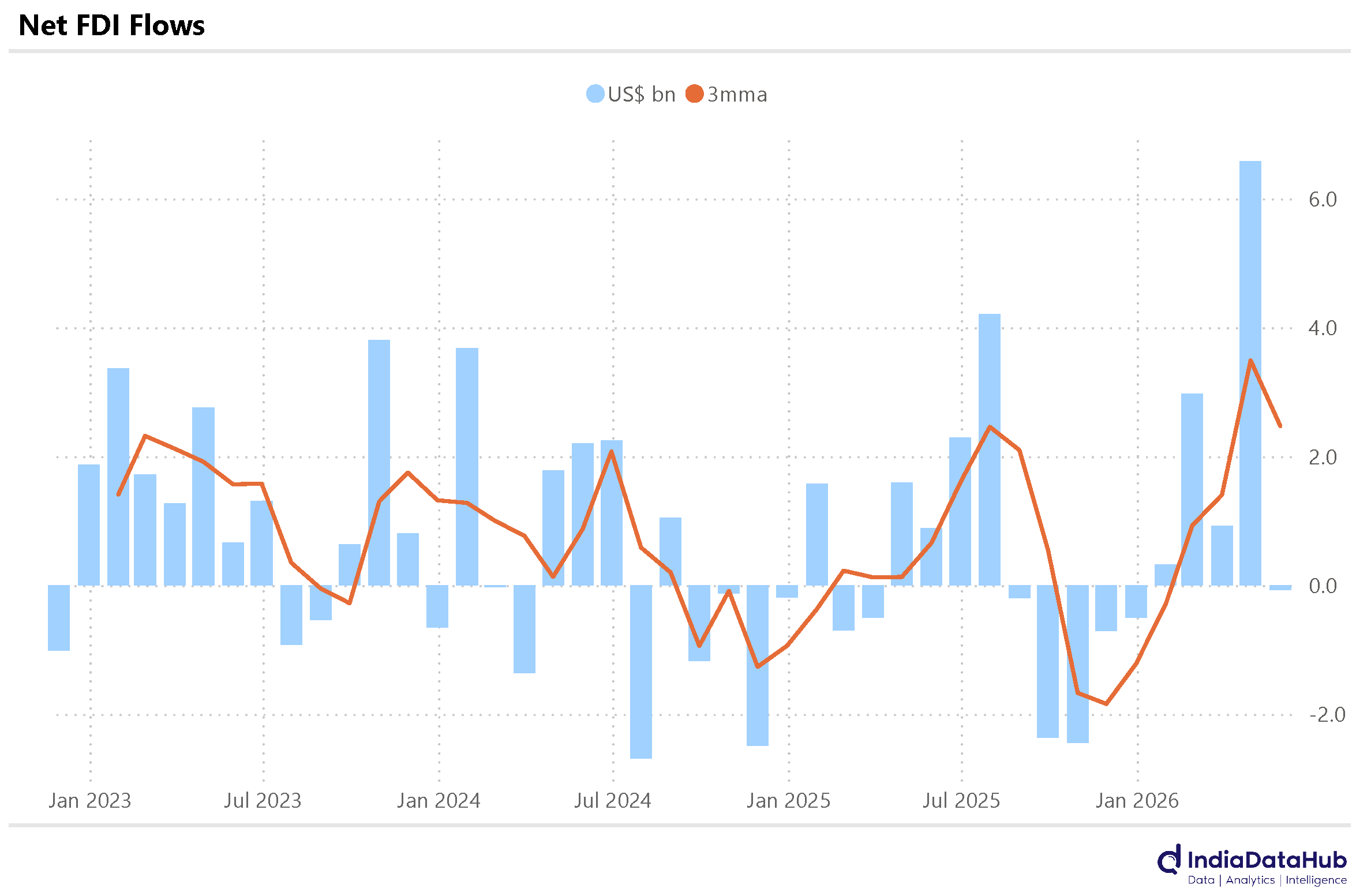
Net FDI turned negative in May as Gross inward FDI more than halved sequentially and fell more than 20% YoY to US$6bn. Repatriation and Outward FDI remained stable or down on a YoY basis. However, the sharply higher FDI in April means that cumulative net FDI in the first two months of the year is up more than 150% YoY.
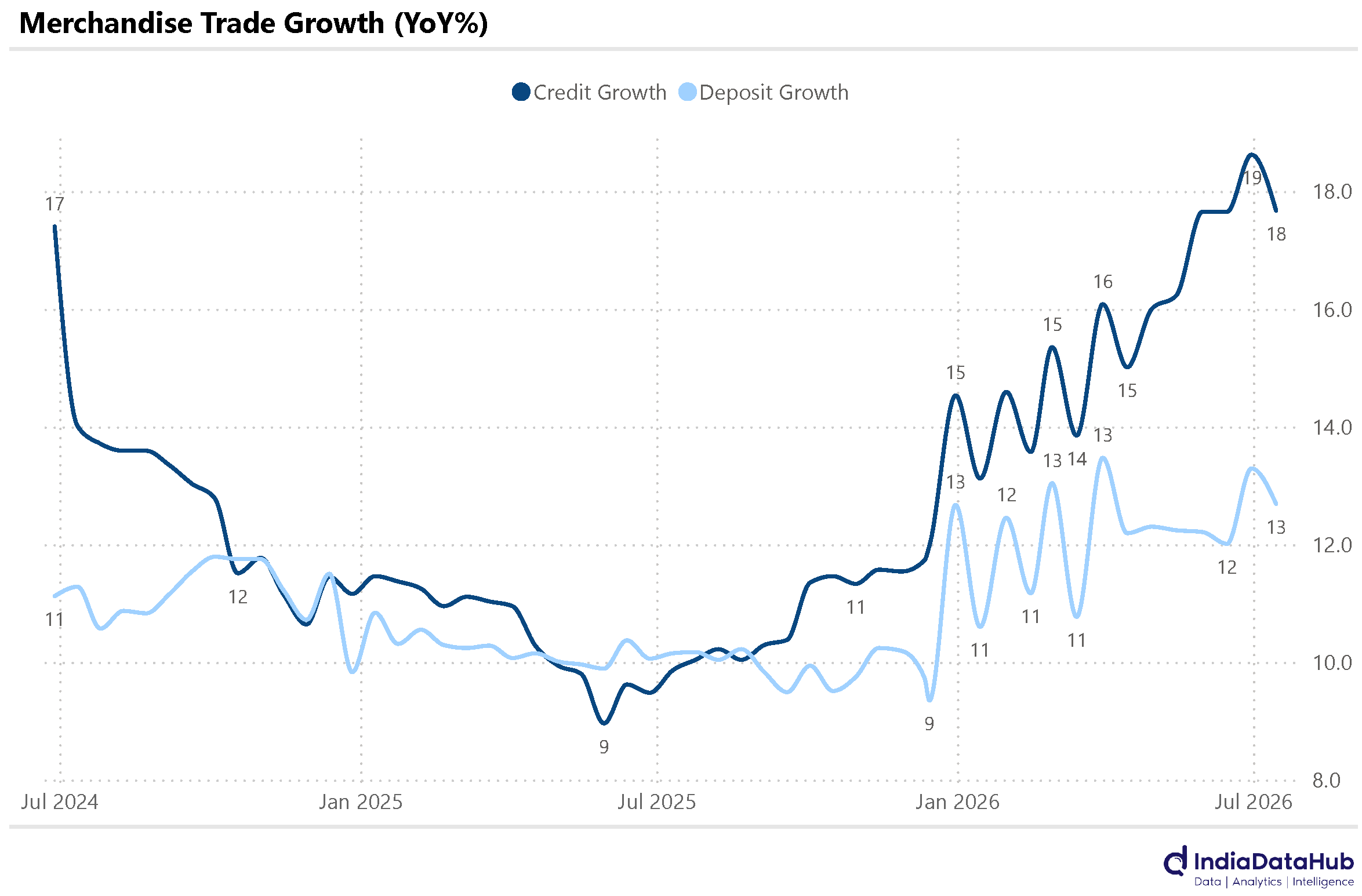
Lastly, credit growth continues to remain strong. As of 15th July, it stood at 18% YoY, and it has remained at this level for the past two months. Deposit growth has ticked to ~13% YoY over the past month but remains well below the credit growth, and thus the credit-deposit ratio continues to rise and is now well into the 80s.
That’s it for this week. See you next week…